
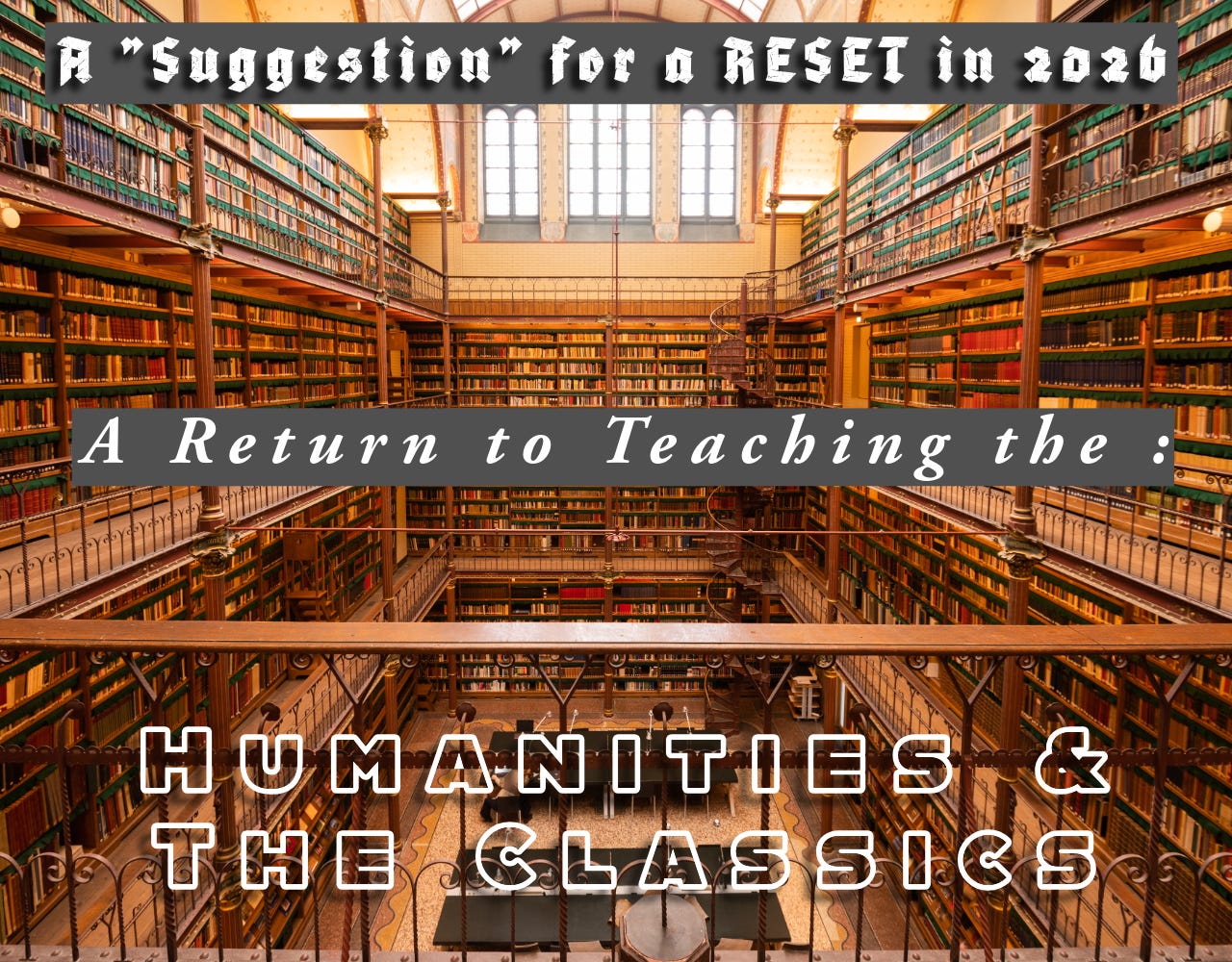
A RETURN TO TEACHING MULTIDISCIPLINARY HUMANITES IN A CLASSICAL EDUCATION
As a culture, one person, one family ... at a time ... can we recover the "humanities" ?

Loquendum ut vulgus, sentiendum ut docti. We speak as the common people, we must think as the learned. 7 Co. 11.
This is a bit of a different Article for me. I did NOT awake yesterday with any intention of writing this Article. As I normally do, I had asked my Lord Christ Jesus: "... What are we going to do together today Lord ?"
I heard in my heart "education . . tell your testimony". I then recalled mine education ... in my youth. And I then understood what i was to write. This Article is the result.
And for full disclosure here, I had seen over the past few days' numerous "opinion" posts and articles about a few states discussing reading the Bible again in schools.
Reflecting on that, I knew from my prior deep historical research into this matter, that these recent words: "... read the Bible again ..." in current news stories, were not quite accurate when that came to Horace Mann's lifetime work in the AD mid-1800's (see discussion below) ... that is; to remove any sectarian education from public school education: (primary schools through "publically funded" "universities"; distinguished from ... privately endowed colleges (ie., as not accepting public funds), and decided by the Supreme Court's decision in: Trustees of Dartmouth College v. Woodward, 17 U.S. (4 Wheat.) 518 (1819), (ie., see discussion below).
NOTE:
First, readers may learn here today why I pedantically insist on the citation of primary sources as opposed to secondary sources gathered from commentaries, opinion texts, and recently authored books. I come by this habit from my training at The Hill School which I now briefly present to readers below for informed consideration.
Second, I am NOT presenting my personal story of Humanities & Classics education at The Hill School as a course of action for every reader's children. I fully recognize it's expensive by today's standards; and it is impractical for those in their post high school/college years of life.
[Three … of thousands of free Classics online resources are provided at the end of this Article. These are classics which encourage Critical Thinking skills development in youth ... as well as adults].
The good news is that at the time I attended The Hill, the internet did not exist. And the current massive amount of hard copy reprintings of classical texts (also available online at archive.org and Project Guttenberg ... also did not exist).
So let's discuss a practical and inexpensive alternative with one definition, with which readers may be unfamiliar. By my own personal experience, the training at The Hill simply began there ... however it did not end there.
That Humanities & Classics education has continued through today on a self-taught basis; and, within that past 10 years or so, amplified by, and guided by the "asked for" revelations, discernment, and wisdom of my Lord Christ Jesus. Let's put a pin in that.
If I were asked for percentages of that learned at The Hill and that learned afterward ... I would say 20% at and 80% after would be that ratio. 🔥🙏
DEFINITION: "autodidactic, as in self-taught having skills or knowledge acquired through one's own efforts without formal training. ...
ETYMOLOGY: autodidactic. (adj.)
"self-taught," 1838, from Greek autodidaktikos "self-taught," from autos "self" (see auto-) + didaktos "taught" (see didactic).
https://www.etymonline.com/word/autodidactic
[Again, I would modify that definition today adding: with my the Lord Christ Jesus leading me to which texts to read, if any, and to guide me with any questions I may have. And to briefly emphasize, this pivotal point in this Article, I suggesr watching this short 3 min. video FIRST. Viewers will soon understand WHY ? ].
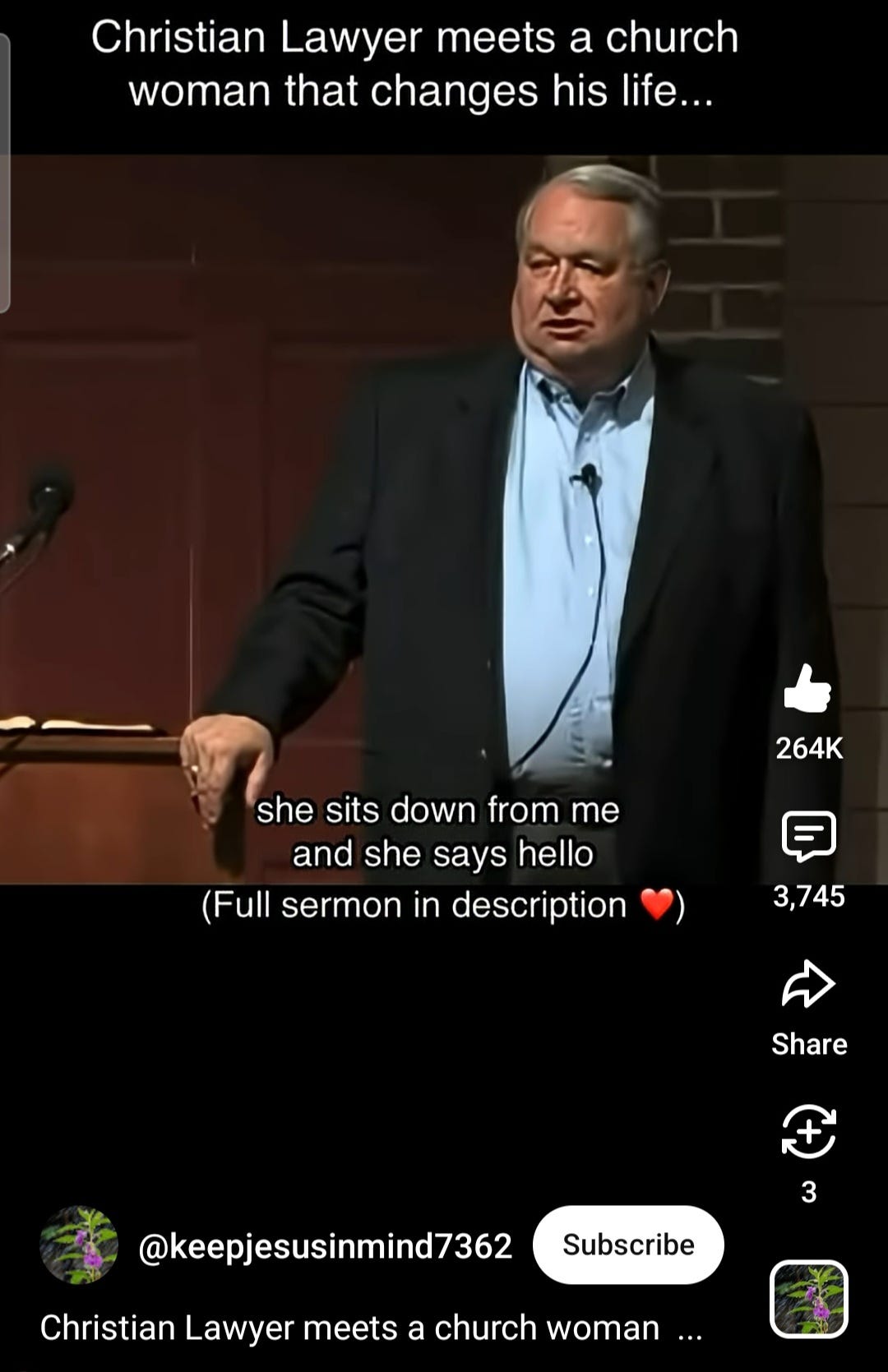
https://youtube.com/shorts/bl3uwXmYauY?is=_4kdHmFQirKzaIzf
My question to readers is simple ... before continuing further. How can that message in the 3 min. video be taught by a simple change in public education policy; where, teachers initiate "mere" reading the Bible in classrooms much like a history book; but, where these educators are constrained from providing context and meaning for any passage read.
What I mean by constrained is any practice where teachers attempt to provide such context and meaning will likely cross over the line into a "sectarian" viewpoint; a forseeable objection ... which I further discuss in greater detail below.
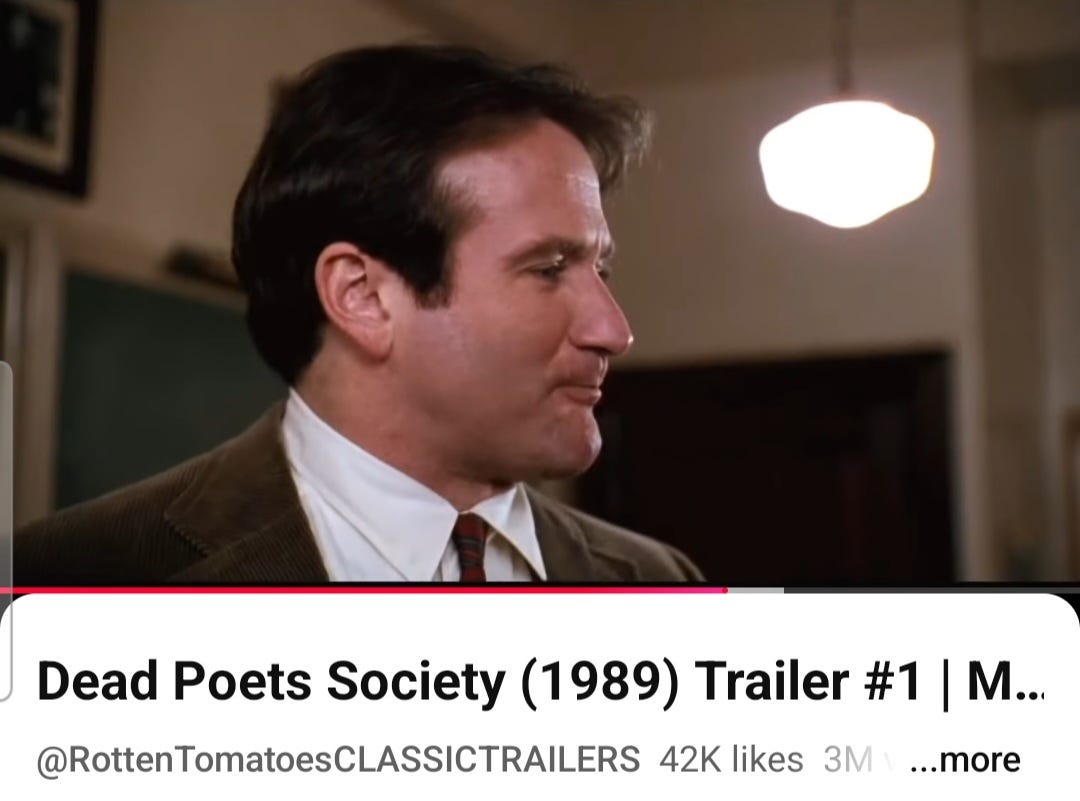
1989 film: Dead Poets Society ... (staring Robin Williams ... A reflection of what The Hill School was like when I attended. Watch the trailer.
https://youtu.be/ye4KFyWu2do?is=8J50A2N7ajFH0aAB
So I searched online for "... Humanities education ...". WHY ? I was introduced at age 16 to that type education while I attended The Hill School (from AD 1969-1972). The Hill was then, and is today, a privately endowed preparatory school structured in the English style of "forms" being: "Third through Sixth Forms" replacing (9th-12th grades vernacular).
When I searched; pleasantly I found The Hill School still offered its Humanities program unchanged at its core And, The Hill's seal and motto "Whatsoever Things are True" also remained unchanged.

For clarity, I was fortunate to receive a scholarship there from The Hill's alumni endowment fund. Part of the education at The Hill was everyday chapel service ... and a service on Sunday's.
Carved into the arched granite lentil over the entrance to the chapel were just these words: "... Whatsoever Things are True ..." from Phillipians 4.8
"... 8. Finally, brethren, whatsoever things are true, whatsoever things are honest, whatsoever things are just, whatsoever things are pure, whatsoever things are
lovely, whatsoever things are of good report; if there be any virtue, and if there be any praise, think on these things. 9. Those things, which ye have both learned, and received, and heard, and seen in me, do: and the God of peace shall be with you. ..." (KJV)
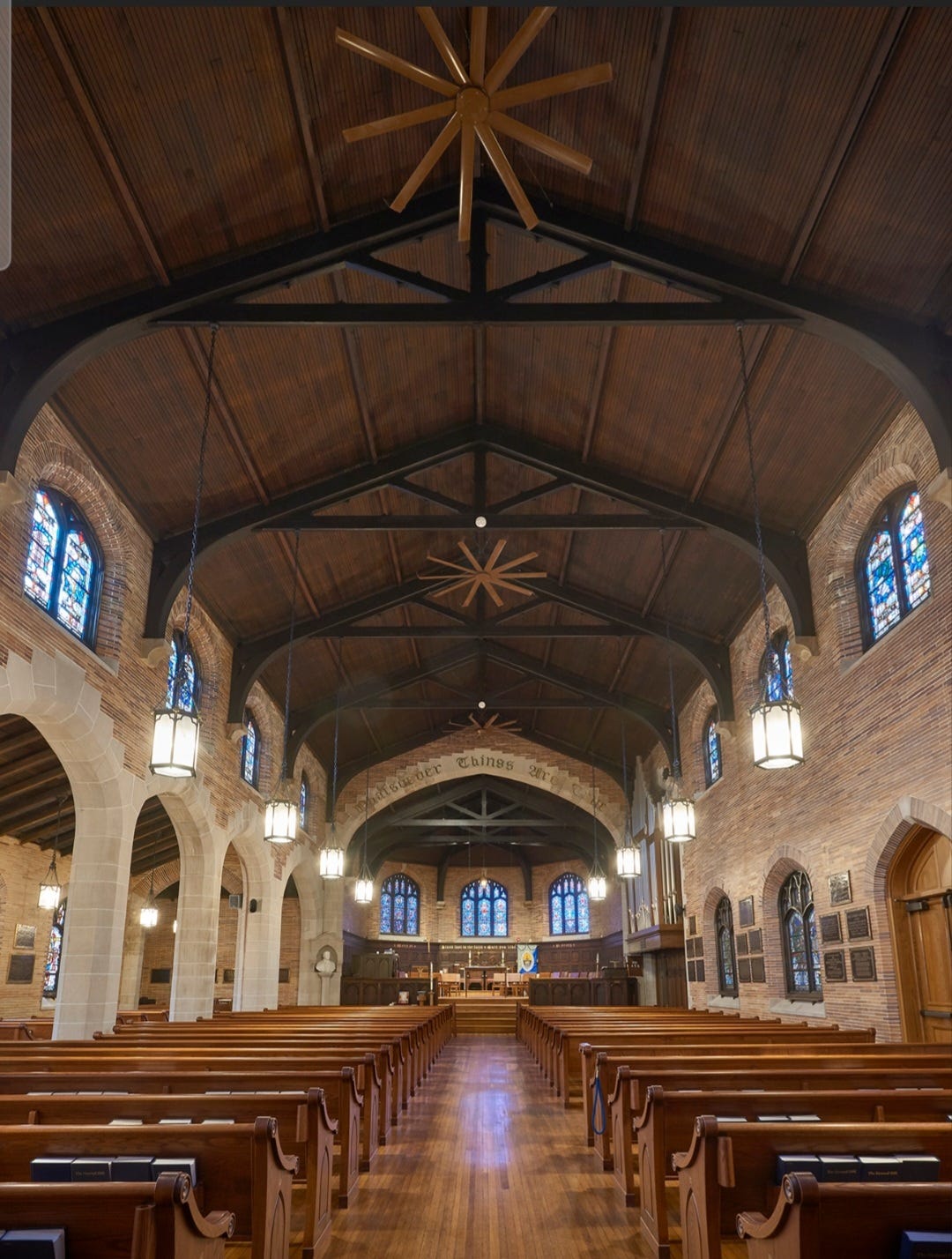
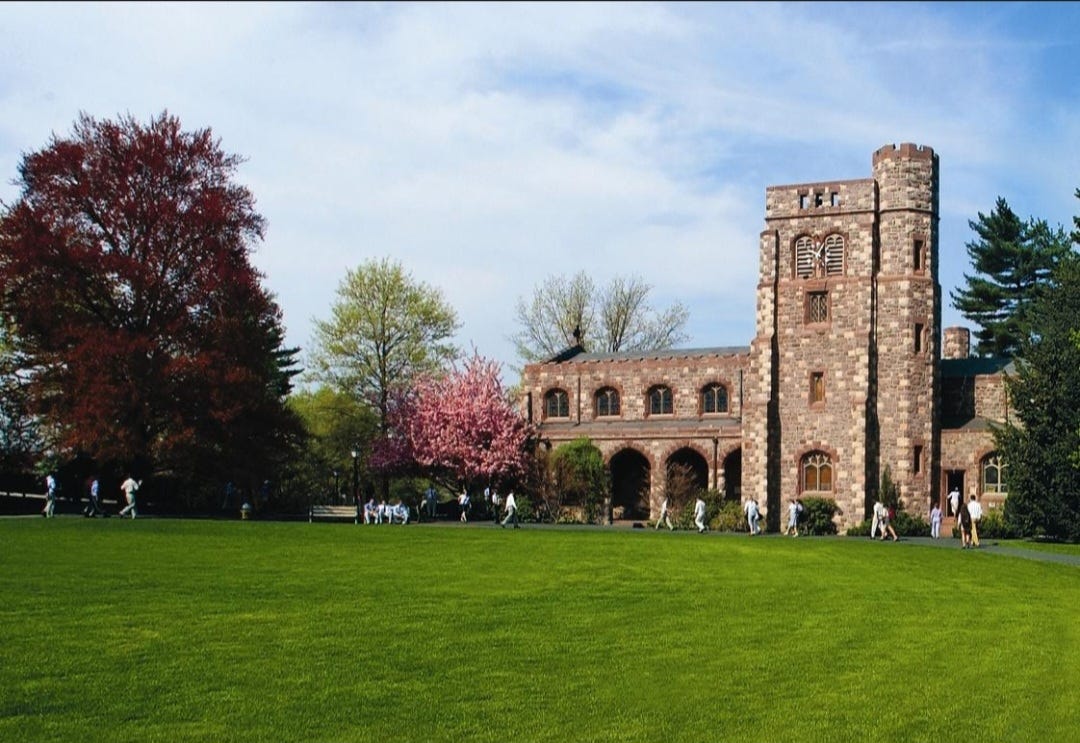
So what is offered today at The Hill ?
"... The Humanities, properly understood, encompass all forms of human self-expression aimed at communication with others. Spoken language, music, written language of all genres, drama, visual arts, architecture, and more recently film and digital arts, have evolved in constant interaction with one another and in concert with technological developments and advances, and can only be fully understood in relation to one another.
The Humanities program at The Hill, uses "greatest jewels" of human creative and intellectual accomplishment, as the foundation from which the students as citizens of a rapidly changing 21st century global community will venture farther afield in both space (beyond the traditionally defined West) and time (to study contemporary creative works) while looking ahead to anticipate the adult world they are about to inherit.
Humanities 3 and 4 together are designed to guide students as they attain the sophisticated levels of both critical and creative thinking that are the foundation of effective, lucid and compelling oral and written articulation of their own understanding, analysis, and appreciation.
These are the “skills” at the core of the Humanities program at The Hill, as they are throughout the liberal arts curriculum. It is the means to those ends that make the Humanities program at The Hill different; those skills are developed in response to and interaction with the “best” of human creation.
Humanities 4 AP is the second year of a two year sequence of courses. It prepares students for the CEEB Advanced Placement Examination in AP English Literature and Composition. Humanities 3 and 4 together are designed to guide students as they attain the sophisticated levels of both critical and creative thinking that are the foundation of effective, lucid and compelling oral and written articulation of their own understanding, analysis and appreciation. These are the “skills” at the core of the Humanities Program at The Hill, as they are throughout the Liberal Arts curriculum.
It is the means to those ends that make the Humanities program at The Hill different; those skills are developed in response to and interaction with the “best” of human creation. Within the evirons of the Levis Room, Humanities 4 students will explore the critical concepts of “genius” “greatness” and “excellence” through their encounters with the Illiad and Hamlet as well as Michelangelo and Beethoven, and a variety of modern, contemporary and global authors, artists and cultural phenomena. They will write on a daily basis, while exploring a wide range of genres and rhetorical methods and techniques as both critics and practitioners themselves. Humanities 4 students must be prepared to be challenged daily within an active, interdisciplinary, student-centered learning environment. This course requires summer preparatory work, which includes, reading, writing and experiential activities. ..."
https://www.thehill.org/academics/academic-departments/humanities
The Hill Library where I invested many hours studying from "old books" ... and not just a "few all nighters":
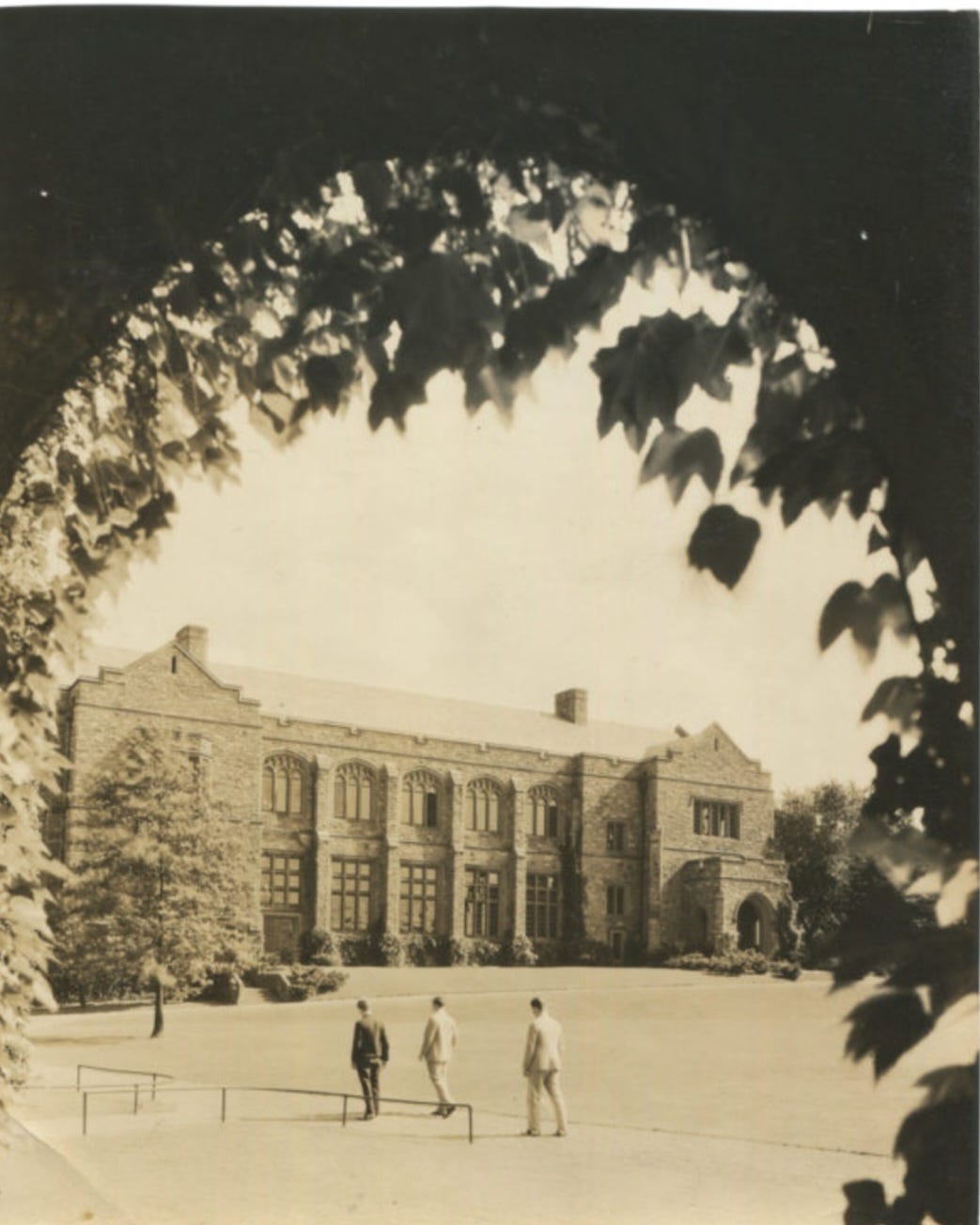
AD 1920's

AD today
A PERSONAL TESTIMONY: This is one of many examples I might use to present the value of bringing Humanities back into American education. In my American History AP class at The Hill School I proposed an Independent Study which was approved in Winter 1972.
I completed that task usingva few Latin Maxims of Law (see below), and in doing so, I chose Dartmouth College for the continuance of my undergrad education. It bears upon the question of precisely "what is public education ?" The answer may not be what readers think.
Trustees of Dartmouth College v. Woodward, 17 U.S. (4 Wheat.) 518 (1819), often called simply The Dartmouth College Case, was a landmark decision in United States corporate law from the United States Supreme Court dealing with the application of the Contracts Clause of the United States Constitution to private corporations. The case arose when the president of Dartmouth College was deposed by its trustees, leading to the New Hampshire legislature attempting to force the college to become a public institution and thereby place the ability to appoint trustees in the hands of the governor of New Hampshire. The Supreme Court upheld the sanctity of the original charter of the college, which predated the creation of the State. ( https://en.wikipedia.org/wiki/Dartmouth_College_v._Woodward ), see further: ( https://supreme.justia.com/cases/federal/us/17/518/ )
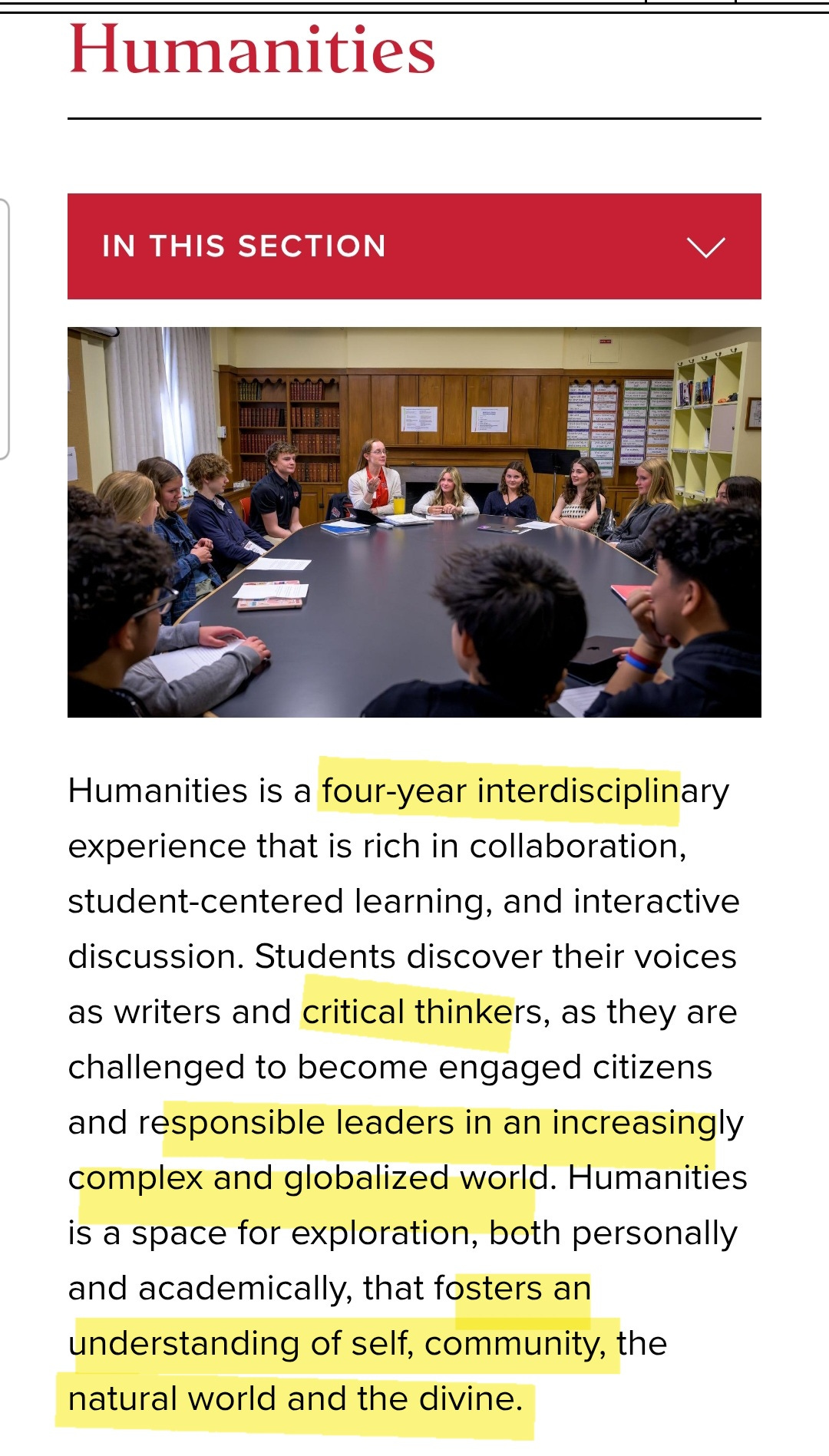
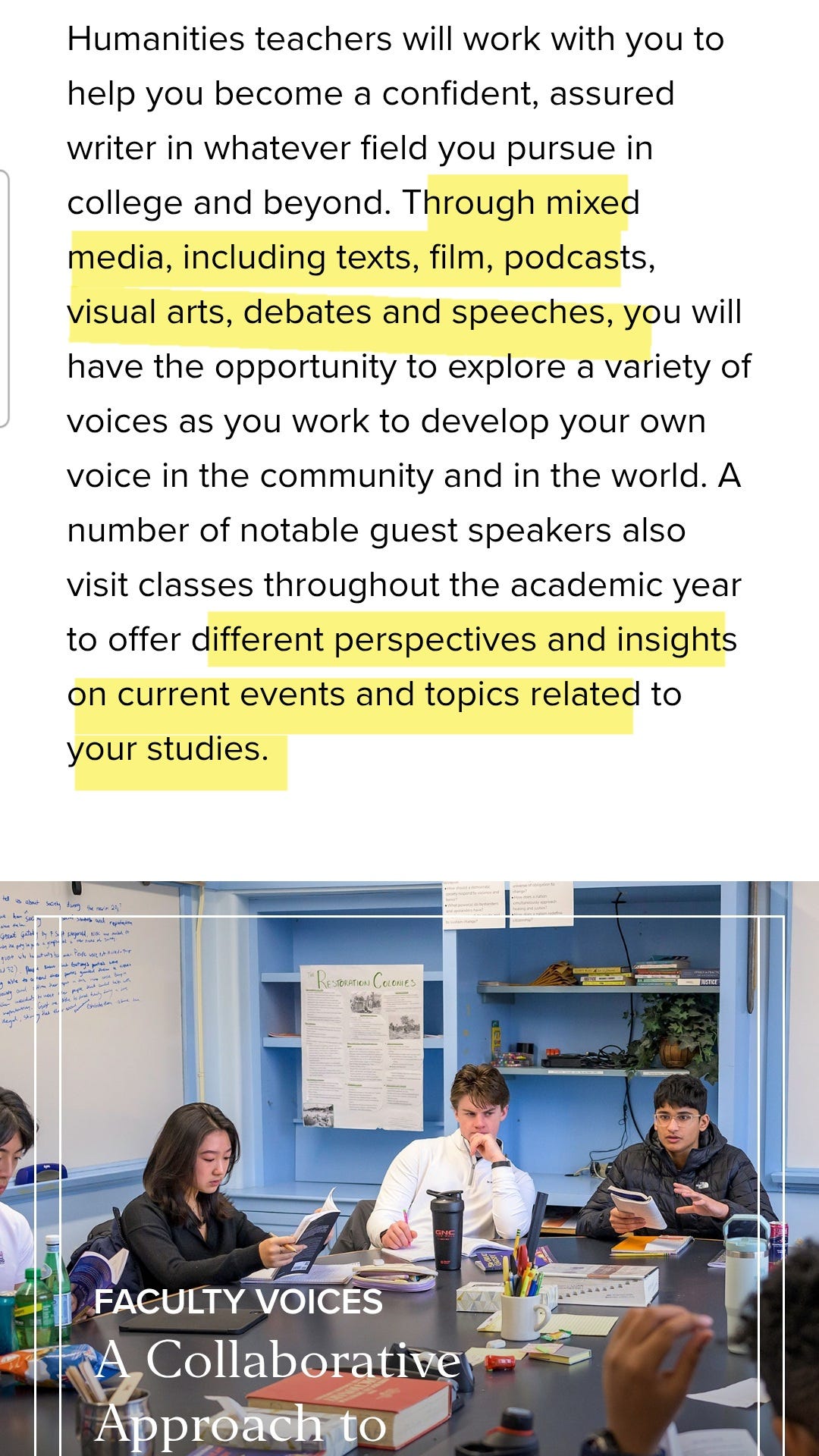
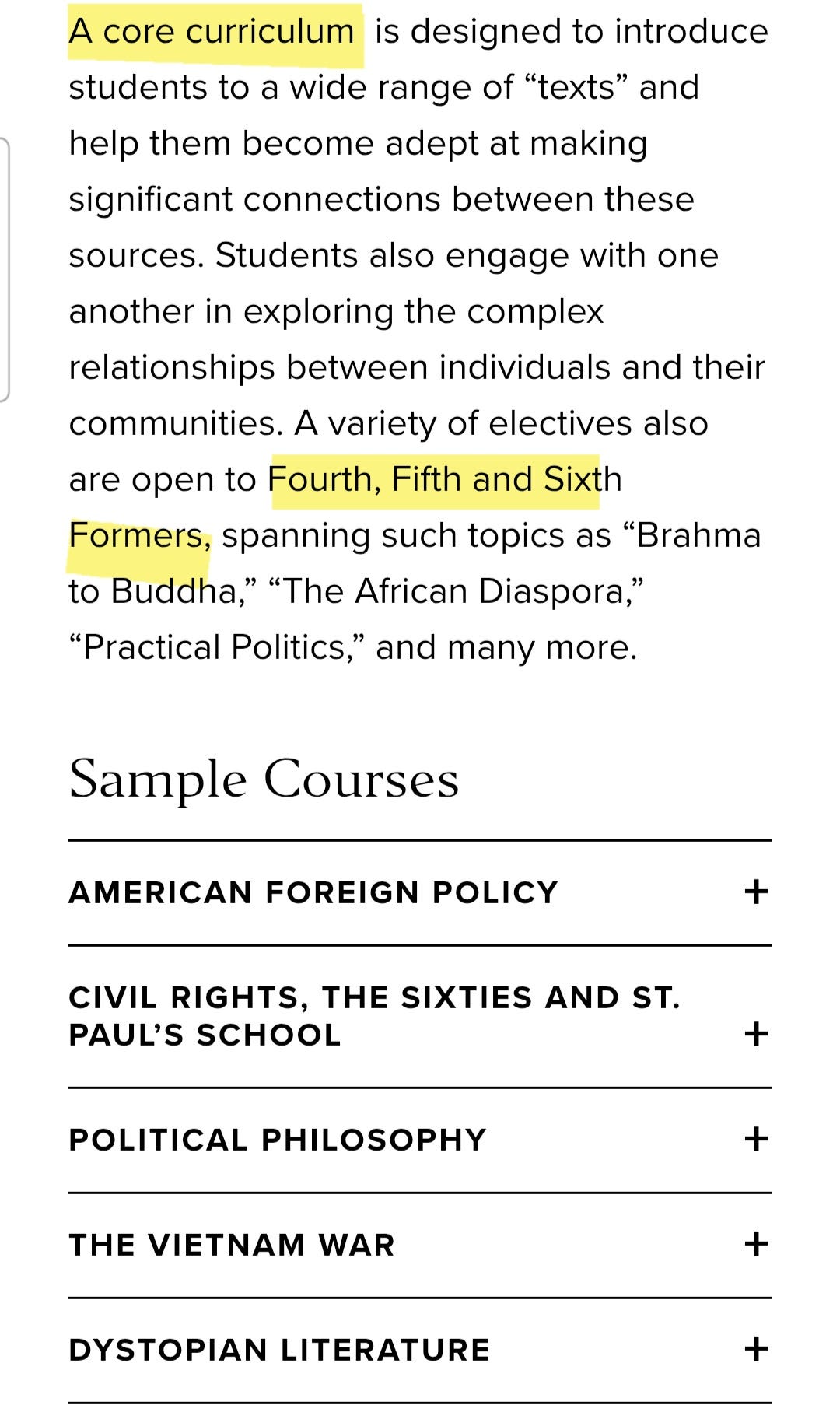
St. Pauls' Prep School (New Hampshire) ... another example of a Humanities program currently being offered.
https://www.sps.edu/academics/areas-of-study/humanities
St.Pauls' Prep School (New Hampshire) his a similar Humanities Program.
https://www.sps.edu/academics/areas-of-study/humanities
A Return to Horace Mann ... the Father of American Education and the Supreme Court Decisions ... on Prohibition of teaching sectarian context and meaning of Bible passages to students.
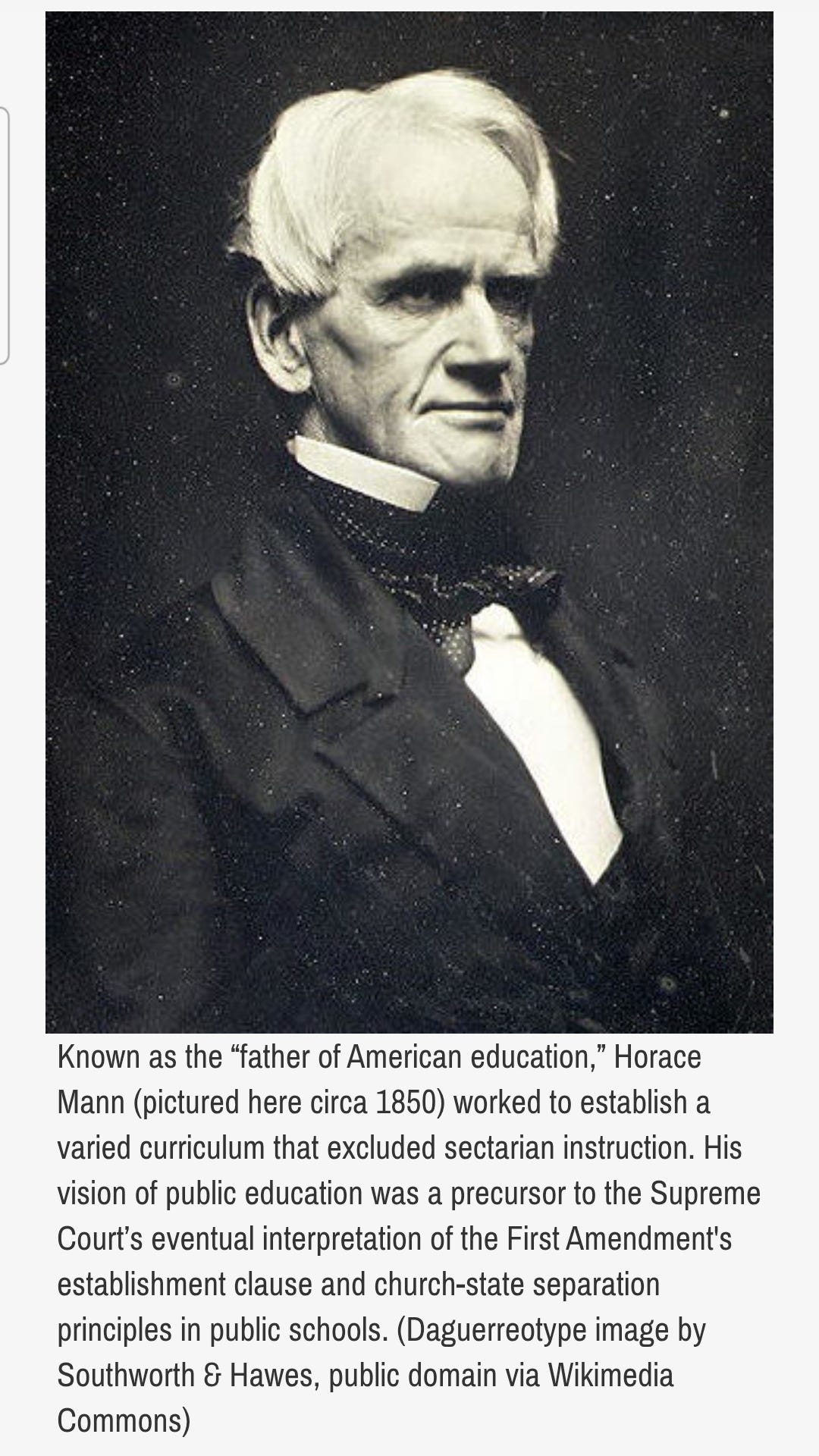
"... Known as the “father of American education,” Horace Mann (1796–1859), a major force behind establishing unified school systems, worked to establish a varied curriculum that excluded sectarian instruction. [... SECTA'RIANISM, n. The disposition to dissent from the established church or predominant religion, and to form new sects. Noah Webster's 1828, "American Dictionary of the English Language"].
"... His [Horace Mann] vision of public education was a precursor to the Supreme Court’s eventual interpretation of the establishment clause and church-state separation principles in public schools.
Mann attended Brown University and the Litchfield Law School in Connecticut. After graduation, he built a successful legal career and was subsequently elected to the state house in 1827 and the state senate in 1833. In 1837 Mann played a key role in establishing the Massachusetts State Board of Education, and he went on to become the board’s first secretary of education.
Mann promoted universal education
As secretary, Mann advocated for “common schools,” institutions that would be available to everyone, regardless of their ability to pay tuition. Mann believed that universal education would allow the United States to avoid the rigid class systems of Europe. In his twelfth (and last) annual report for the Massachusetts school board, Mann wrote that education “is the great equalizer of the conditions of men—the balance-wheel of the social machinery.”
He also argued that universal education would allow the United States to maintain a democracy; all Americans, he thought, “must, if citizens of a Republic, understand something of the true nature and functions of the government under which they live.”
Mann opposed sectarian instruction
In establishing public common schools, Mann opposed sectarian instruction and in its stead advocated instruction in universal Christian principles and values that would allow students to make their own moral judgments.
Mann’s non-sectarian approach to public education was criticized at the time (and is still viewed by some today) as hostile to religion and detrimental to both individual and social morals.
Some leaders of the Roman Catholic Church, for example, argued that the common schools, while professing to be nonsectarian, in fact embodied general Protestant principles, contrary to the First Amendment.
First Amendment Court holdings later upheld Mann’s nonsectarian vision
By the 1960s, in cases like Engel v. Vitale (1962) and Abington School District v. Schempp (1963), in which the Court invalidated school-sponsored prayer and Bible readings in public schools on establishment clause grounds, the Supreme Court had begun to use the establishment clause of the First Amendment to strike prayer and devotional Bible reading (usually from the King James Bible that many Protestants preferred) from the public schools.
In defense of nonsectarian schools in his last school board report, Mann argued that the common school “earnestly inculcates all Christian morals,” and “in receiving the Bible, it allows it to do what it is allowed to do in no other system,—to speak for itself.
But here it stops…because [the common school] disclaims to act as an umpire between hostile religious opinions.”
CREDIT: This article was originally published in 2009. Dr. David Carleton is the chair of the Department of Global Studies and Human Geography at Middle Tennessee State University.
https://firstamendment.mtsu.edu/article/horace-mann/
Here are THREE EXAMPLES of Humanities' "First Principles" instruction for readers to consider:
FIRST EXAMPLE: Teaching from a "few" of many volumes of classical Latin Maxims on the Natural Law:
In addition, certain time honored maxims of law, known to the founders are relevant to this discussion.
"... MAXIM. An established principle or proposition. A principle of law universally admitted, as being just and consonant with reason.
2. Maxims in law are somewhat like axioms in geometry. 1 Bl. Com. 68. They are principles and authorities, and part of the general customs or common law of the land; and are of the same strength as acts of parliament, when the judges have determined what is a maxim; which belongs to the judges and not the jury. Terms do Ley; Doct. & Stud. Dial. 1, c. 8. Maxims of the law are holden for law, and all other cases that may be applied to them shall be taken for granted. 1 Inst. 11. 67; 4 Rep. See 1 Com. c. 68; Plowd. 27, b.
3. The application of the maxim to the case before the court, is generally the only difficulty. The true method of making the application is to ascertain how the maxim arose, and to consider whether the case to which it is applied is of the same character, or whether it is an exception to an apparently general rule.
4. The alterations of any of the maxims of the common law are dangerous. 2 Inst. 210.
https://famguardian.org/Publications/BouvierMaximsOfLaw/BouviersMaxims.htm
Peloubet’s Maxims of Law | Relevant to Slavery. (AD 1880)
• 797. Homo vocabulum est naturæ ; persona juris civilis. (CAL. LEX. ) - Man is a term of nature; person, of the civil law.
• 1067. Jura naturæ sunt immutabilia. (LOFFT, 563.) - The laws of nature are unchangeable.
• 1407. Multa non legibus humanis, sed foro divino pertinent. (LOFFT, 281.) — Many things pertain not to human laws, but to divine jurisdiction.
• 1082. Jurisprudentia est divinarum atque humanarum rerum notitia ; justi atque injusti scientia . (Dig . 1 . 1 . 10 . 2 .) — Jurisprudence is the knowledge of things divine and human; the science of the just and the unjust.
• 1096 . Jus naturale est quod apud omnes homines eandem habet potentiam . ( 7 COKE, 12.) - Natural right is that which has the same power among all men.
• 1173 . Leges naturæ perfectissimæ sunt, et immutabiles ; humani vero juris conditio semper in infinitum decurrit, et nihil est in eo quod perpetuo stare possit. 17 COKE, 25 . ) - The laws of nature are perfect and immutable; but the condition of human law tends always to infinity, and there is nothing in it that can continue perpetually.
• 1247. Lex spectat naturæ ordinem . (COKE, LITT. 197. b .) - The law regards the order of nature.
• 2159. Ratio est radius divini luminis (COKE , LITT. 232. b .) - Reason is a ray of divine light.
• 1422. Naturæ vis maxima. (2. INST. 564.) The force of nature is greatest.
• 1419 . Natura appetit perfectum; ita et lex . (HOB. 144 .) — Nature desires perfection; so does the law.
• 1174. Leges non verbis sed rebus sunt im positæ . (10 COKE, 101.) -- Laws are imposed on things, not on words.
• 1183. Legislatorum est viva vox, rebus et non verbis, legem imponere. (10 COKE , 101.) - The voice of legislators is a living voice, to impose laws on things, not on words.
• 1179. Legibus sumptis desinentibus, lege naturæ utendum est. (2 ROL. 298.) - Laws imposed by the state failing, we must act by the law of nature.
• 2302. Servitus est constitutio de jure gentium , qua quis domino alieno contra naturam subjicitur. (COKE, LITT. 116. b .) - Slavery is an institution by the law of nations, by which a man is subjected to a foreign master, contrary to nature.
SECOND EXAMPLE: Teaching from the Classics such a Philo Judeaus of Alexandria:
Essay: "Confusion of Tongues" | Sojourners, Strangers, Foreigners -- with Citizenship in Heaven.
"... XVII. (75) And take notice that Moses does not say that they came unto a plain in which they remain, but that they "found" one, having searched around in every direction, and having considered what might be the most suitable region for folly; for in reality every foolish man does not take from another for himself, but he seeks for and finds evils, not being content only with those which wicked nature proceeds towards of its own accord, but also adding thereto such perfect skill in evil as arises from constant practice in contriving wrong.
(76) And I wish indeed that after he had remained there a brief time he had changed his abode; but even now he thinks fit to remain, for it is said that having found the plain they dwelt there; having settled there as if in their own country and not as if in a foreign land; for it would have been less trouble for men who had fallen in with wicked actions to look upon them as strange and foreign to them, and not to consider that they had any kindred or connection with them. For if they had looked upon themselves as sojourners among them, they would have changed their abode at a subsequent time, but now having settled fixedly among them they were likely to dwell there for ever.
(77) For this reason all the wise men mentioned in the books of Moses are represented as sojourners, for their souls are sent down from heaven upon earth as to a colony; and on account of their fondness for contemplation, and their love of learning, they are accustomed to migrate to the terrestrial nature.
(78) Since therefore having taken up their abode among bodies, they behold all the mortal objects of the outward senses by their means, they then subsequently return back from thence to the place from which they set out at first, looking upon the heavenly country in which they have the rights of citizens as their native land, and as the earthly abode in which they dwell for a while as in a foreign land.
For to those who are sent to be the inhabitants of a colony, the country which has received them is in place of their original mother country; but still the land which has sent them forth remains to them as the house to which they desire to return.
(79) Therefore, very naturally, Abraham says to the guardians of the dead and to the arrangers of mortal affairs, after he has forsaken that life which is only dead and the tomb, "I am a stranger and a sojourner among You,"{25}{#ge 23:4.} but ye are natives of the country, honouring the dust and earth more than the soul, thinking the name Ephron worthy of precedence, for Ephron,
(80) being interpreted, means "a mound" and naturally, Jacob, the practiser of virtue, bewails his being a sojourner in the body, saying, "The days of the years of my life which I spend here as a sojourner have been few and evil; they have not come up to the days of my fathers which they spent as Sojourners."{26}{#ge 47:9.}
(81) But to him who was self-taught the following injunction of scripture was given, "Do not go down," says the scripture, "to Egypt," that is to say to passion; "but dwell in this land, land which I will tell thee Of,"{27}{#ge 26:9.} namely, in the incorporeal wisdom which cannot be pointed out to the eye; and be a sojourner in this land, the substance which can be pointed out and appreciated by the external sense.
And this is said with a view to show, that the wise man is a sojourner in a foreign land, that is to say in the body perceptible by the outward senses, who dwells among the virtues appreciable by the intellect as in his native land, which virtues God utters as in no way differing from the divine word.
(82) But Moses says, "I am a sojourner in a foreign land;" speaking with peculiar fitness, looking upon his abode in the body not only as foreign land, as sojourners do, but also as a land from which one ought to feel alienated, and never look upon it as one's home."
THIRD EXAMPLE: Teaching from the Classics such as the poetry and essays of Ralph Waldo Emerson:
Essay "Politics "
"... In dealing with the State, we ought to remember that its institution are not aboriginal, though they existed before we were born: that they are not superior to the citizen: that every one of them was once the act of a single man: every law and usage was a man's expedient to meet a particular case: that they all are imitable, all alterable; we may make as good; we may make better.
Society is an illusion to the young citizen. To educate the wise man, the State exists; and with the appearance of the wise man, the State expires. The
appearance of character makes the State unnecessary. The wise man is the State.
He needs no army, fort, or navy, — he loves men too well; no bribe, or feast, or palace, to draw friends to him; no vantage ground, no favorable circumstance. He needs no library, for he has not done thinking; no church, for he is a prophet; no statute book, for he has the lawgiver; no money, for he is value; no road, for he is at home where he is; no experience, for the life of the creator shoots through him, and looks from his eyes.
He has no personal friends, for he who has the spell to draw the prayer and piety of all men unto him, needs not husband and educate a few, to share with him a select and poetic life. His relation to men is angelic; his memory is myrrh to them; his presence, frankincense and flowers.
Essay "Experience"
The physicians say, they are not materialists; but they are: — Spirit is matter reduced to an extreme thinness: O so thin! — But the definition of spiritual should be, that which is its own evidence. What notions do they attach to love! what to religion! One would not willingly pronounce these words in their hearing, and give them the occasion to profane them.
I carry the keys of my castle in my hand, ready to throw them at the feet of my lord, whenever and in what disguise soever he shall appear. I know he is in the neighborhood hidden among vagabonds. It is very unhappy, but too late to be helped, the discovery we have made, that we exist. That discovery is called the Fall of Man. Ever afterwards, we suspect our instruments. We have learned that we do not see directly, but mediately, and that we have no means of correcting these colored and distorting lenses which we are, or of computing the amount of their errors.
Perhaps these subject-lenses have a creative power; perhaps there are no objects. Once we lived in what we saw; now, the rapaciousness of this new power, which threatens to absorb all things, engages us. Nature, art, persons, letters, religions, — ..."
Interesting read. I support the use of classics and the inclusion of humanities in education. Education in just the sciences, the facts of history or just technical knowledge reduces value judgements, and critical thinking, reducing education to a sterile, functional task as opposed to building the mind and exercising thought. It is in the exercising of thought that newness is created. It is in the applications of values that we embark out knowledge to the betterment of humanity as a whole, rather than the betterment of our personal situation with no regard to the consequences to those affected by our own choices. Rabelais gives a fine example of the sterility of knowledge only based learning when he said "Science, without conscience, is but ruin of the soul". That can apply equally to any discipline studied in a factual basis.
I did not know about this when I wrote that article today ABOVE. I sensed it, but did not have the information Sabrina reveals here about Texas, Abbott and TPUSA. Please ask our Lord Christ Jesus for discernment and wisdom. 🔥🙏
https://substack.com/@1972nogenetherapy/note/p-204345105?r=19ia12